Communities, television, software, automations. B has been building for over 15 years now.
Different mediums, same instinct — find something worth making, and make it happen.
Give B a problem. She'll build a way through it.
Reported to be:
Resourceful • Curious • Thorough • Reliable • Collaborative • Independent
Building for Myself
2026After ~10 years of working, studying, and often doing both at the same time, B felt it was time to take a proper break.
She moved to Bangkok, Thailand, where the lower cost of living gave her the time and freedom to explore new things, learn, travel and figure out what she wanted to do next.
With more time and headspace, B started building things for herself — combining the technical skills she already had with newer AI and coding tools to automate tasks, work with her own data and make everyday life a little better.
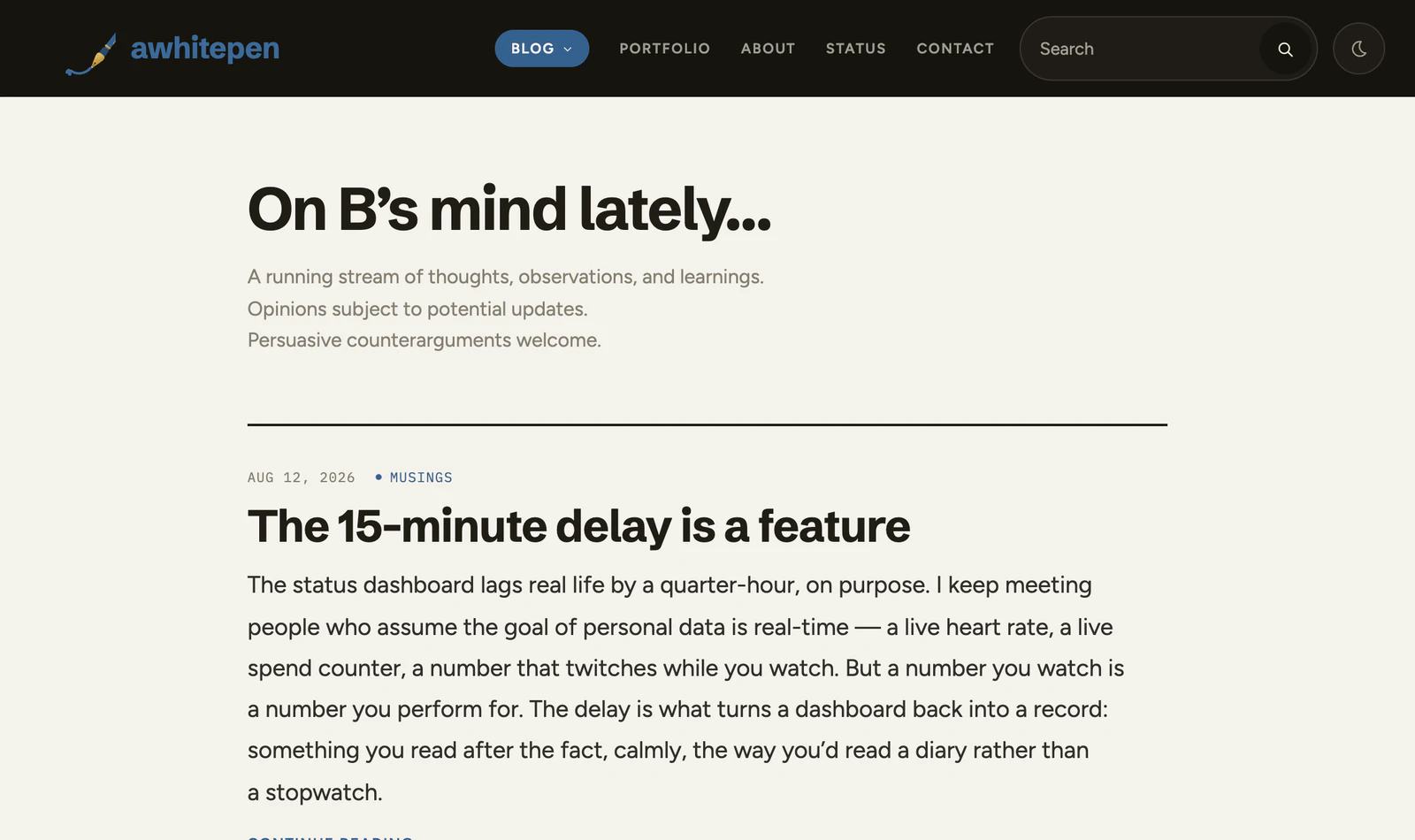 awhitepen.comB’s little corner of the internet — custom WordPress theme, designed and vibe-coded with Codex.
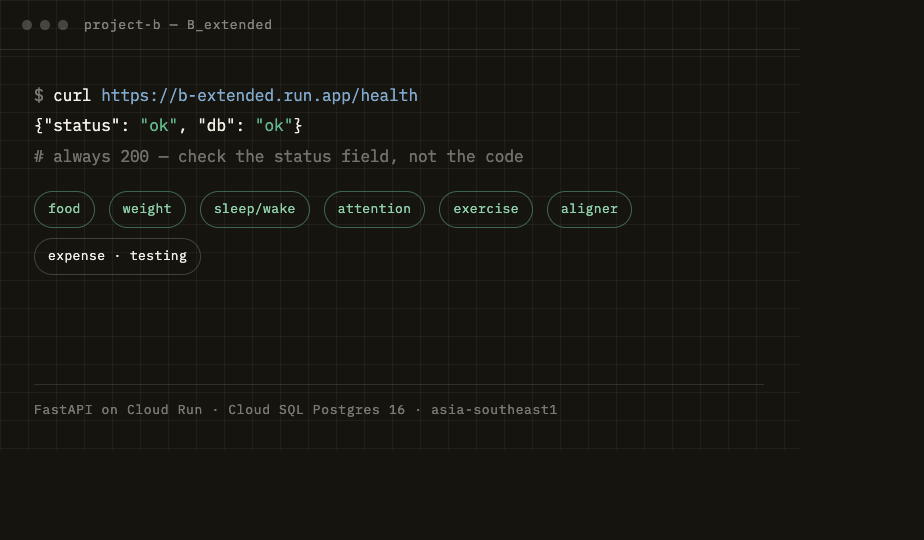 project-bB’s personal data system — tracking life, connecting the data and turning it into useful decisions.
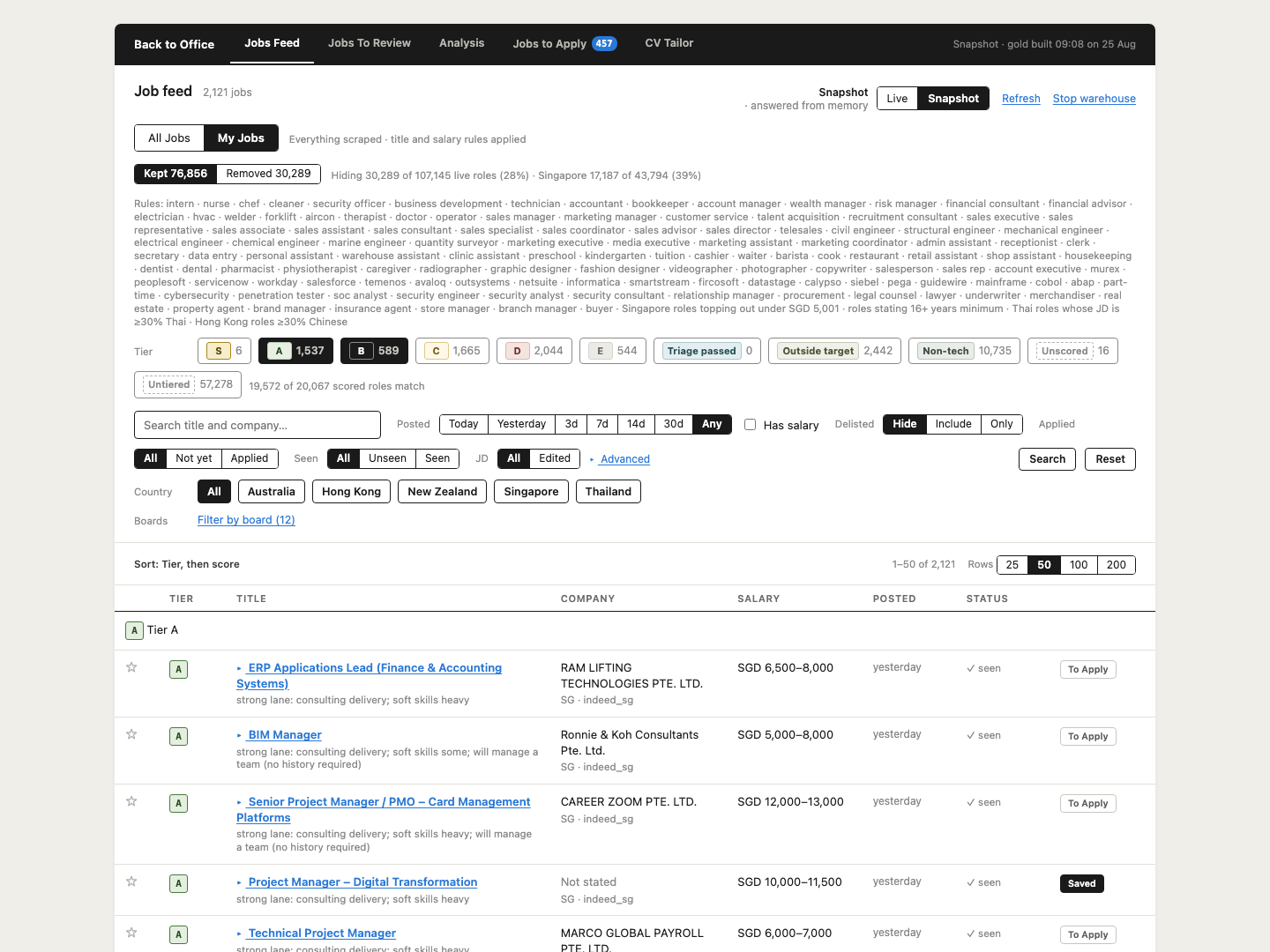 back-to-officeB’s job-search system — collecting, deduplicating, filtering and ranking roles from end to end.
B finally had time to dig deeper into things she'd studied for years but never had the space to properly devour — including working through ISLP and revisiting statistics from the ground up.
She also kept up with what was changing outside the textbooks: workshops, meetups and hands-on experimentation with newer tools and platforms, from GCP and MCP to coding agents and OpenClaw.
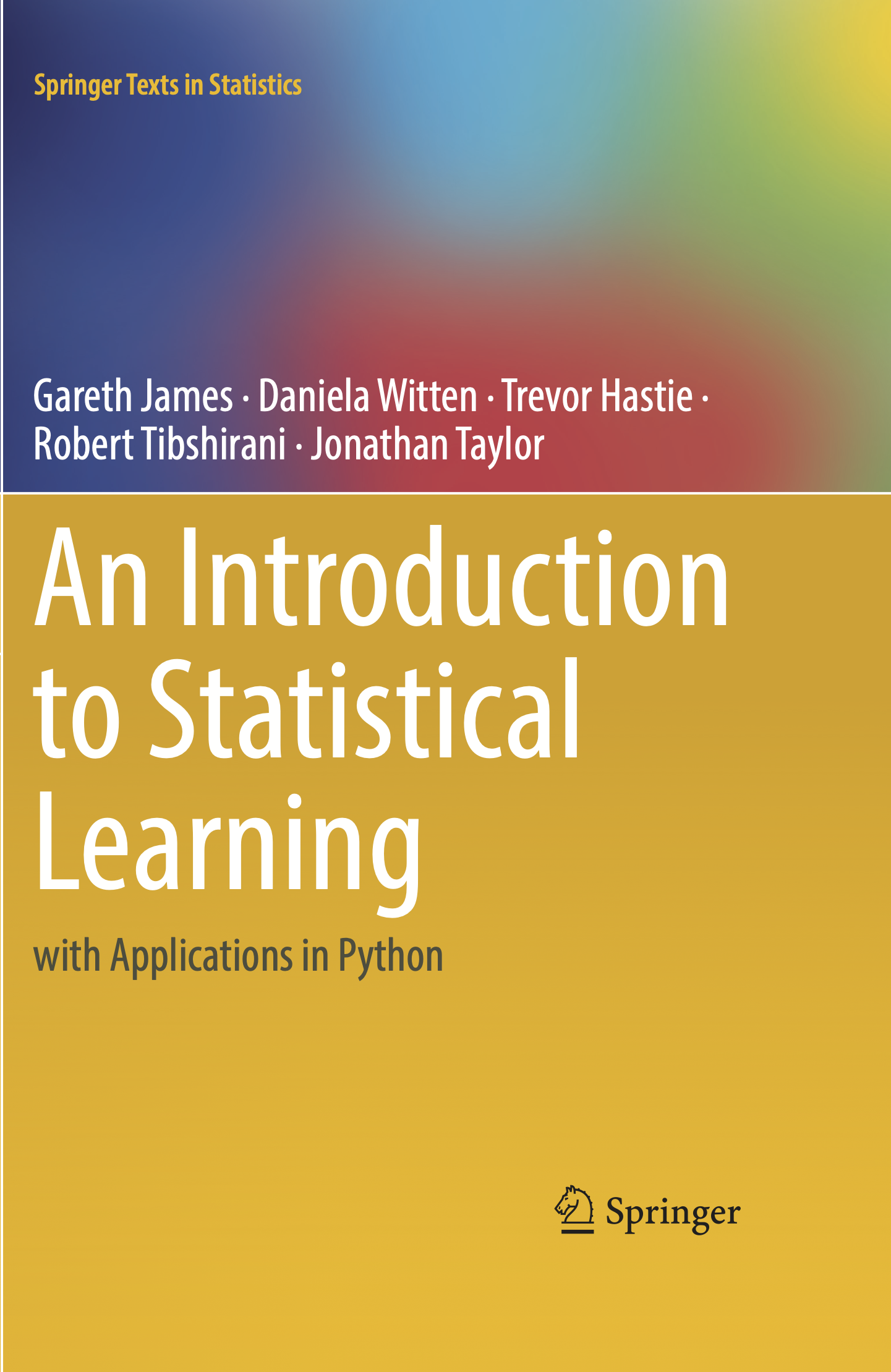 Intro to Statistical Learning (Python)B goes back to the fundamentals — strengthening her statistics foundation and putting it to work in Python.
 Vibe-Coding with CodexB swaps the textbook for the terminal — learning what she can build when AI does more of the coding.
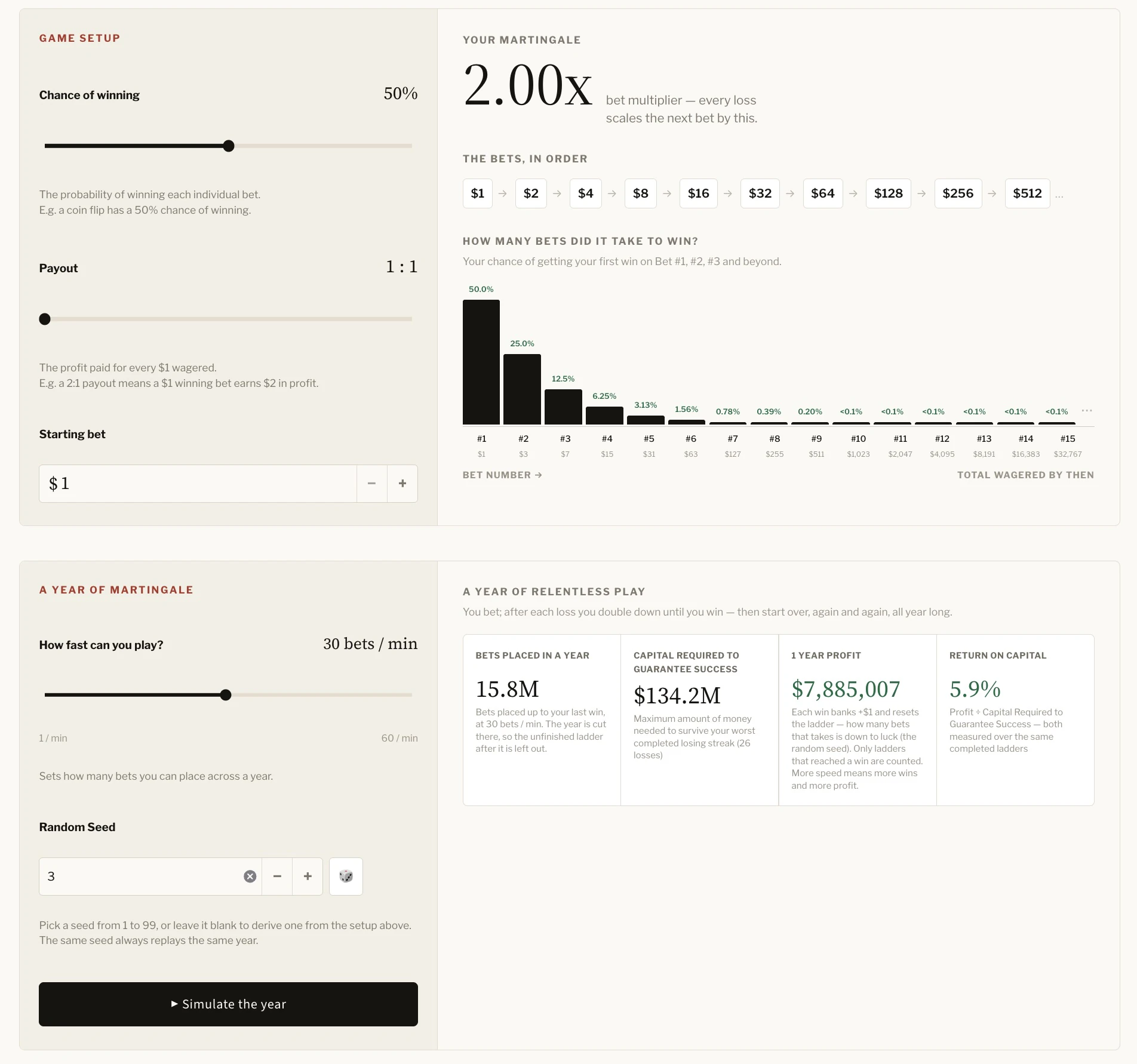 Martingale: The Mathematics of Being Too Rich To LoseB turns a probability question into a Streamlit simulator — exploring when a terrible betting strategy can actually work.
For the first time in her life, B was exercising consistently — with a 38-week-and-counting streak on Strava. She used the break to take better care of both her physical and mental health, building healthier habits and resilience for tomorrow.
At some point, she realised DIY would only get her so far. So she hired a personal trainer, started learning about health and fitness properly, and got more intentional about how she trained.
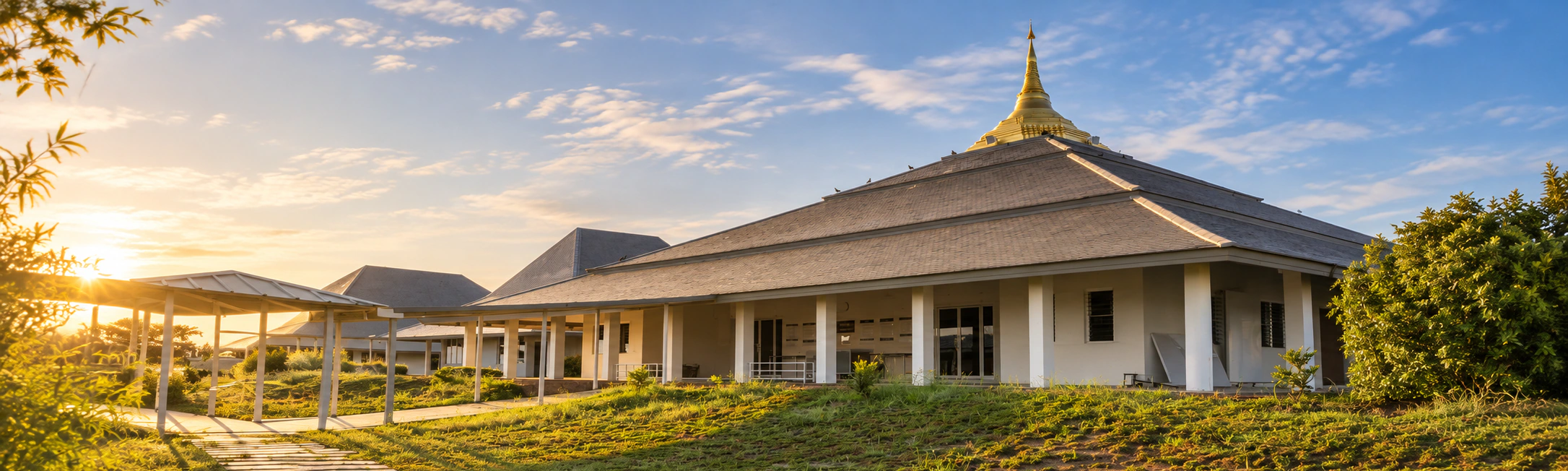 Vipassana in the ‘S. N. Goenka Tradition’B spends ten days learning to sit with herself — in silence, without a phone, internet, or even pen and paper.
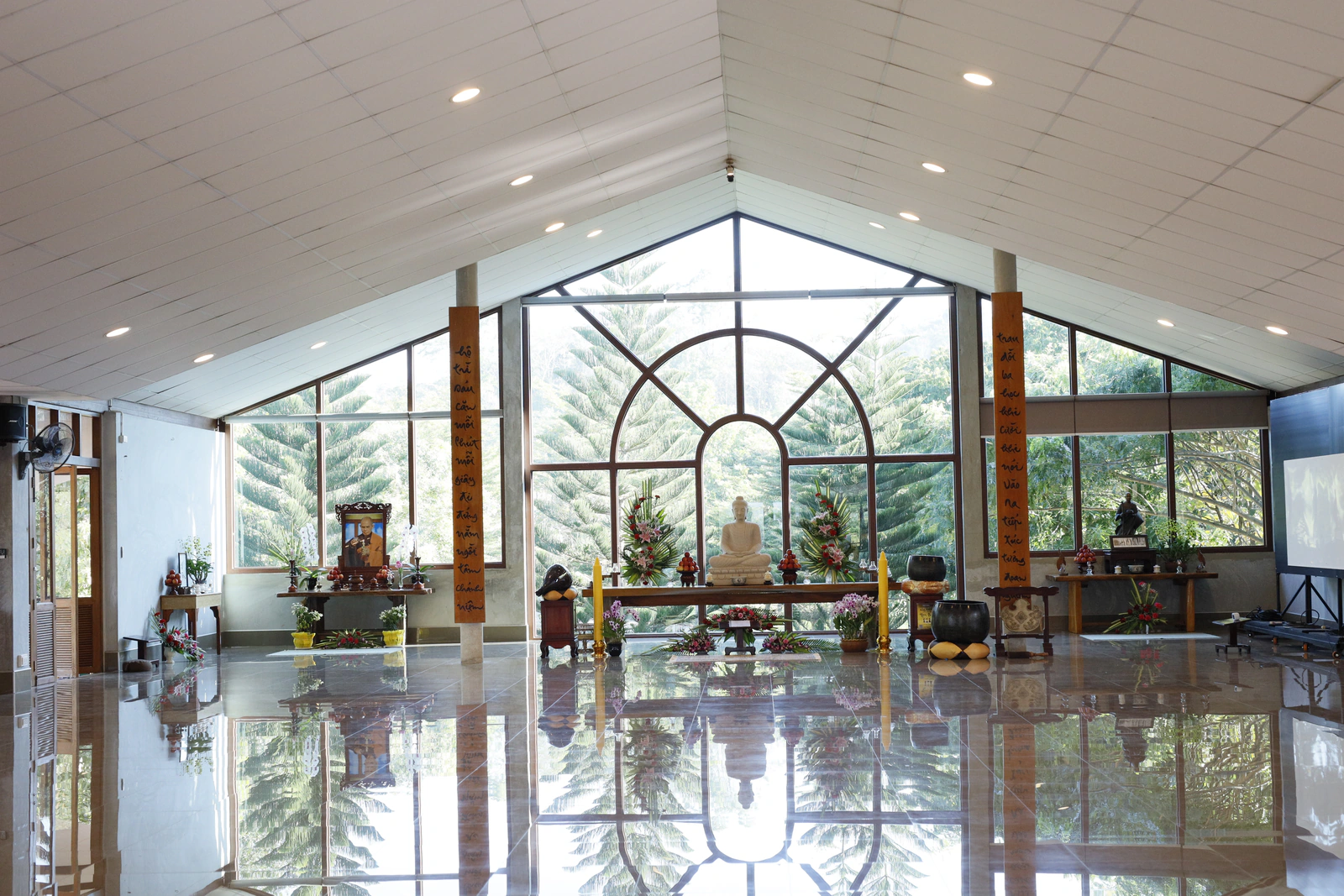 Waking Up at Plum VillageB spends Lunar New Year at a Buddhist monastery — slowing down, living in community and learning a different way to be present.
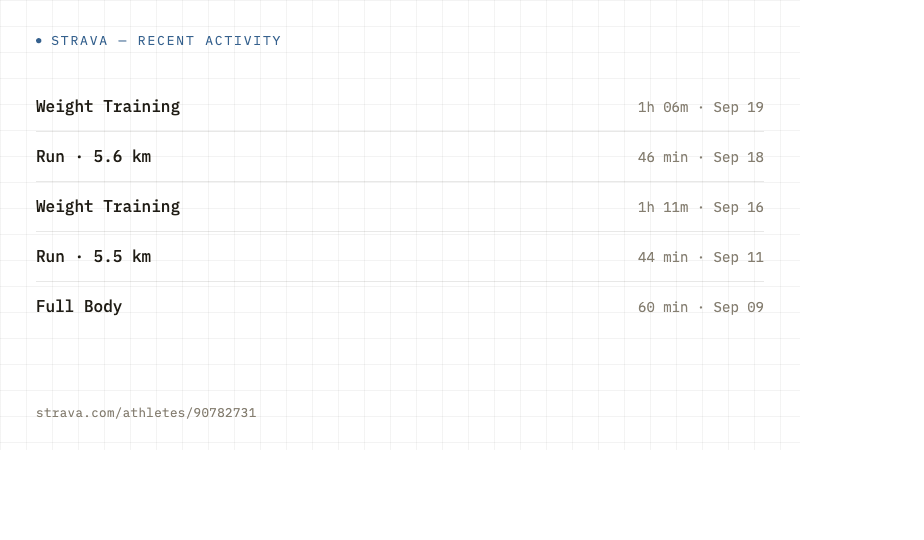 Things B Learnt About Getting FitLessons from a year of tracking, experimenting, and learning.
Building in Tech
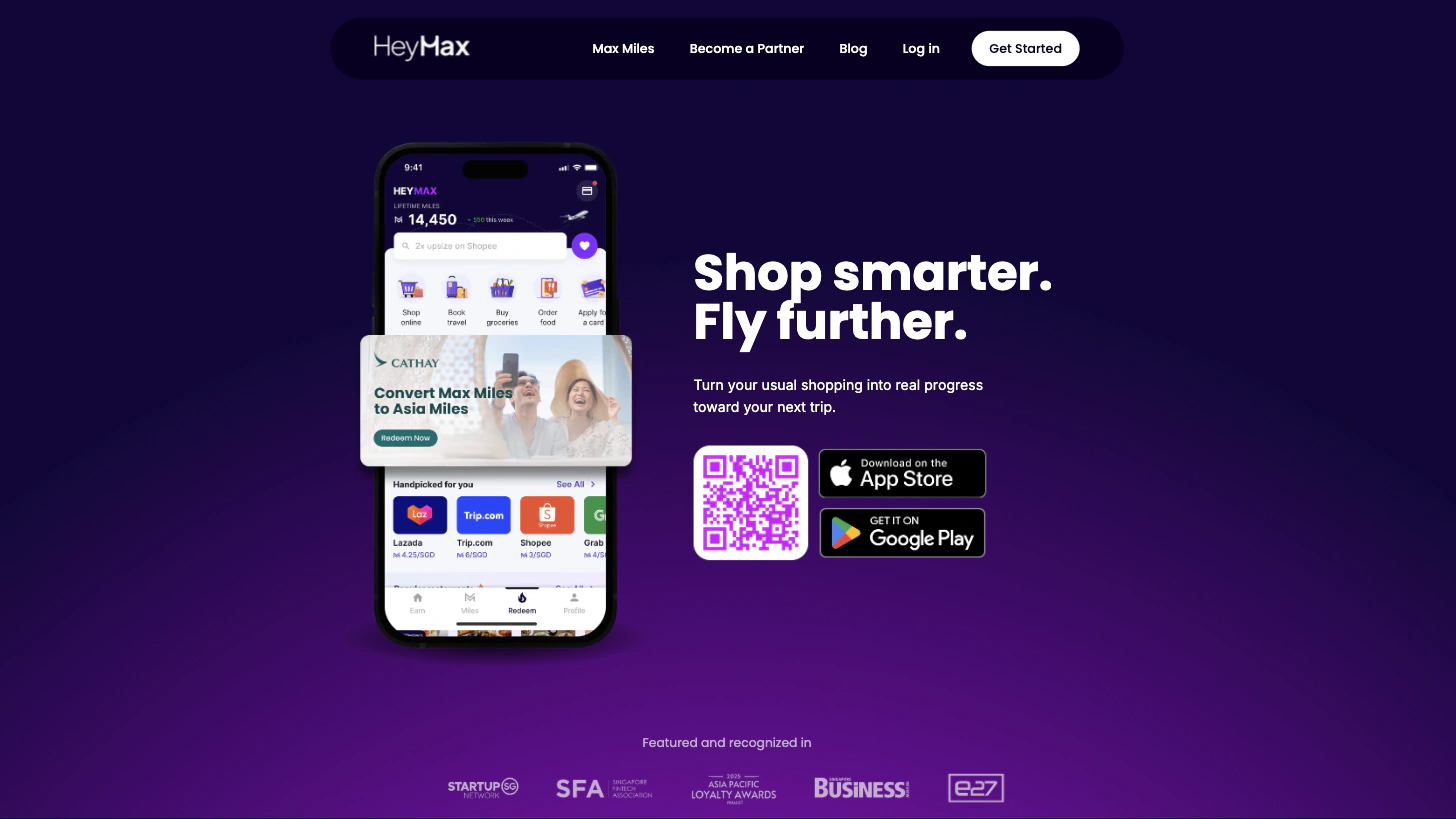
2021–2025B joined HeyMax as its first dedicated data hire alongside the founder. Two more data interns joined later.
Startup life meant wearing a lot of hats: setting up Airflow, working on the data pipelines and models behind the product, building out product analytics in Mixpanel, and handling whatever else needed doing. Build, ship, find the next problem, repeat.
B's first stint in big corporate came after a decade in television: user and product research, first at Twitter, then at Standard Chartered.
She quickly learnt that doing analytics in a large organisation isn't just about knowing what to do with data. First, you have to find it. Who owns it? Where does it live? Who can give you access? And who knows the unofficial route when the official one leads nowhere?
The work taught her as much about stakeholder management as analysis — talking to people across teams, building relationships, navigating large organisations, and eventually getting the data and context needed to answer the question.
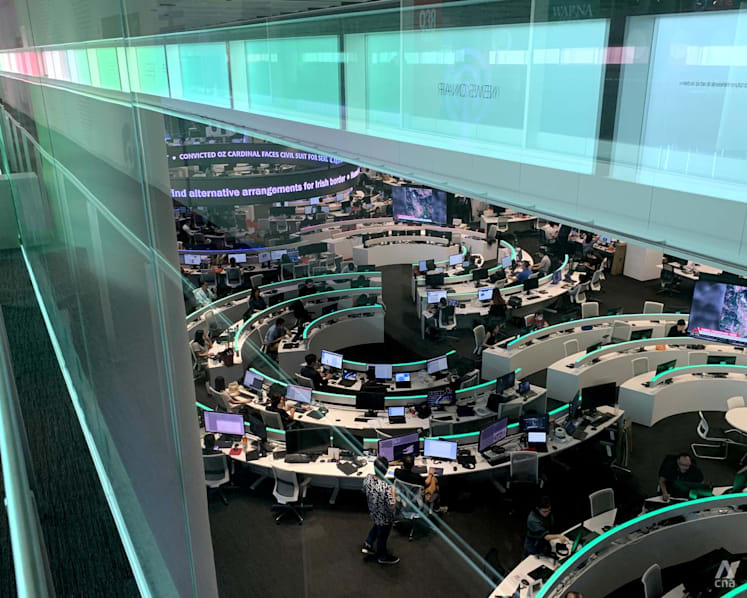
B's secondment from the newsroom into the technology team working on the platforms that distributed the shows she had spent years producing.
She worked across the software development lifecycle — requirements, development, testing, CI/CD, deployment and maintenance — alongside a distributed engineering team across time zones. It was a very different view of how television got from the people making it to the people watching it.


COVID happened. Television became, for a while, a lot of video calls stitched together and called a show. B decided it might be a good time to try something else.
She got lucky: her employer supported the pivot, sponsoring her for a Graduate Diploma in Systems Analysis. She later chose to specialise in data, completing a Master of Technology in Enterprise Business Analytics at the National University of Singapore (NUS).
Building for TV
2015–2022B eventually moved away from the faster, more time-sensitive end of Current Affairs into what television people sometimes call “blue-chip” programmes — longer-form shows that weren’t necessarily chasing what happened yesterday, but were still about the issues shaping Singapore at the time. Current Affairs was still Current Affairs. The stories just had a little more room to breathe.
For much of this period, B worked with the same colleague project after project. They were about as different as two people could be.
B was female. He was male. B was short. He was tall. B was Chinese. He was Indian. B was detail-oriented; he was more big-picture, can already. B fussed over facts, research, contracts and scripts. He fussed over lighting, sound and whether the thing actually looked and felt good on screen.
And perhaps most importantly: B would occasionally accidentally offend someone. He would come in afterwards and smooth everything over. 😂
B still doesn’t quite know what stroke of luck put the two of them together for so many projects, but she’s glad it did. Working so closely with someone whose strengths were almost the inverse of hers made her much more aware of her own blind spots — and gave her years to watch, borrow and learn from a very different way of working.
It was an early lesson that getting better at your job doesn’t always mean becoming more of what you already are.
Her new boss taught her something different.
B had previously worked with him when he was a freelancer. He was roughly twice her age and had only recently been through a difficult period in his own life. B didn’t know all the details, and they weren’t hers to know. But she did get to see how much a person — and their circumstances — could change with time.
That stayed with her. A terrible chapter doesn’t necessarily tell you what the rest of the story will look like. People recover. Circumstances change. Our time will come. Keep calm, and carry on.
By then, B didn’t particularly need someone to teach her how to book a shoot, source for an interviewee, research a story or write a script. What she got instead was mentorship in something harder to teach: how to be a good human being while doing the work.
How to work with people who are different from you. How to recognise your own shortcomings. How to let someone else be better at something. How to soften an edge without losing what made you good at your job. And how to remember that, when someone is going through a terrible chapter, you may not yet be looking at the person they will eventually become.
Finally armed with a real CV and a few actual television productions to put on it, B landed a role as a Producer / Researcher at Channel NewsAsia, part of Mediacorp — Singapore’s national broadcaster.
This was a rather different world from a small production house.
There were systems. There were processes. There were established ways of doing things. Freelancers got paid through the right forms. Leave went through the system. Claims went through the system. There were departments for things B previously didn’t realise required departments.
There were much larger budgets to think about now too — sometimes running into seven figures a year, even back then. There were resources to allocate, people to hire, shoots to plan, contracts to deal with, costs to justify and a finite pot of money from which everything had to come.
There was also a legal team. B asked some very lao jiao lawyers some really dumb questions in her early years before eventually wising up. She learnt what you could say, what you could show, what needed another round of checking — and that it was generally better to ask legal before doing the thing rather than afterwards.
And while B still wasn’t travelling outside Singapore, she certainly travelled around Singapore. Her monthly taxi claims could probably have paid for one or two regional return flights. She wrote scripts in taxis, took calls while moving between shoots and interviews, and once managed to strand herself in an ulu-ulu-ulu corner of an island roughly 50 kilometres across because she couldn’t get a taxi back for more than an hour. Her interviewee eventually took pity on her and drove her to the nearest MRT station.
Somewhere along the way, B also became known as “the person who understands data” in an English Current Affairs department of around 100 people.
Which, as it turns out, is an excellent way to become very busy. 😂
People came to her when a story involved statistics, surveys, percentages or research findings they needed help making sense of. B liked figuring out the numbers, but perhaps even more, she liked figuring out how to explain them simply enough that someone else could actually use them.
Sometimes it was something as simple as explaining to boss that, no, the professor we were working with was not going to sign off on “4 in 5 Singaporeans” when the number was closer to 75%. Because 75% is 3 in 4. Not 4 in 5.
B didn’t realise it then, but this would become something of a recurring theme in her career: understand the data, work out what it actually means, then help other people make sense of it too.
Underneath the systems, budgets, lawyers, numbers and general running around was still the part of the job B liked most: being handed something she didn’t yet understand and getting to figure it out.
Give her a question she knew almost nothing about, some time to investigate it, people to talk to and eventually a blank script to fill — and she was very happy.
This was B’s first “real job” out of university — working on factual features for National Geographic through Third Floor Pictures.
B took journalism very seriously. Perhaps a little too seriously — so seriously that an Executive Producer once had to remind her: “this is not university.” Apparently, not every sentence needed an academic paper’s worth of references and supporting material. 😂
To be fair, this was National Geographic. Facts mattered. There was an entire fact-checking department back then, and scripts had to be submitted for verification before they could go out. B loved that. She just, um… perhaps went slightly overboard.
But the programme was about culture, and desktop research could only get B so far. Much of the job was simply talking to people — finding them, earning enough trust for them to open up, interviewing them and learning how to keep a conversation going.
This was where B really started building her people skills. She learnt the little non-verbal tricks that keep someone talking: when to nod, when to stay quiet, when to look curious, when not to interrupt, and how to leave just enough silence for someone to decide they actually have more to say.
It was also excellent training for something B remains reasonably good at today: hearing something that sounds completely ridiculous to her, keeping an absolutely straight and supportive face, and going, “Ohhh… okay. And then what happened?” 😂
You can decide what you think later. First, understand what the person is actually trying to tell you.
And there was research. Lots and lots of research. B spent an unreasonable amount of time in the library. B loved it.
The job also gave B her first official business trip: Malacca, Malaysia. As it turned out, it would also be her only overseas work trip for many, many years.
Her mom had made a rather big fuss about the Malacca trip. B became so anxious about the fuss that travelling would cause at home that, after that, she simply started turning down opportunities that required her to go overseas.
This frustrated her boss because B had built many of the contacts and relationships behind these stories herself. Sending someone else into the field meant handing over weeks or months of context and trust — but B remained extremely reluctant to travel.
There was an irony to all this. While family circumstances were closing off some opportunities, they also helped open another. One of her mom’s friends had a son working at Singapore’s national broadcaster, and he later helped B land her next job there.
B has been lucky like that at various points in her life. She worked hard for the opportunities she got, but she also grew up with networks and circumstances that sometimes made those opportunities easier to reach. Both things can be true.
Her reluctance to travel lasted much longer than that job. For years afterwards, B continued turning down opportunities that required her to go overseas. She rarely travelled abroad even on her days off, and didn’t take a holiday outside Asia until she was past 30.
Looking back, B is a little sad about that. There were places she could have gone, stories she could have chased and experiences she could have said yes to.
For someone as curious about the world as B has always been, she spent a surprisingly long time choosing not to see very much of it.
B would like to do that differently now.
After a failed attempt to transfer from SAJC into Ngee Ann Poly’s Film, Sound & Video course — and eventually ending up at university in Australia instead — B found another way into television during one of her final summer breaks: an internship at Xtreme Media, one of Singapore’s few production houses focused largely on broadcast television.
She was ridiculously lucky to get it, considering her “application” was essentially a five-line email. No CV. No portfolio. No references. Nothing to show for herself except a self-proclamation that “I’m a fast learner and am hardworking.” 😂
The “interview” turned into an almost three-hour crash course at a coffeeshop in the light-industrial estate where the production house was based. B got a rapid-fire introduction to how television gets made — pre-production, production, post-production — and was then more or less thrown into the deep end and told to survive.
And she really did start at the bottom: transcribing interviews and subtitling footage — this was long before AI could do it for you — buying coffees and meals, collecting wardrobe and doing whatever else needed doing.
But her knack for research and sponging up information● was spotted pretty quickly. She developed a reputation as a slightly ridiculous content hoarder: finding enormous amounts of material, figuring out what was actually useful and turning it into something that could work for television.
By the end of the internship, she was writing scripts in both English and Chinese.
Production also taught B something deceptively simple: just ask.
Ask for permission to film somewhere. Ask whether someone will agree to an interview. Ask an organisation for access. Ask an embassy what might help a visa application. The answer might be no — and B learnt to accept a no gracefully — but if you never ask, you’ve already given yourself the no.
She also learnt that how you ask matters. Be respectful. Explain what you’re trying to do and why. Sometimes that means a proper email instead of a casual message, a formal introduction, supporting documents or a letter on company letterhead. Make it easy for the other person to understand that the request is genuine.
B has carried that lesson with her ever since: ask respectfully, be prepared to hear no, but at least give people the opportunity to say yes.
In hindsight, the lesson had already worked once before anyone taught it to her. That five-line internship email was itself just B asking.
Xtreme Media also introduced B to a world very different from the fairly sheltered one she had grown up in. She made her first non-Chinese Singaporean friend there — they’re still friends today — and worked alongside people whose lives had included homelessness, prison and other experiences completely outside anything she knew.
Getting to know them as colleagues and friends made B much less inclined to judge someone by the conventional Singaporean markers of what a “successful” or “respectable” life is supposed to look like.
She also met people who went all-in on building something they believed in — including people willing to empty savings accounts and piggy banks to get a production made. For sheltered B, this was an entirely different world.
The team taught her something about herself too.
B was a bit of a workhorse and, especially then, would say yes to basically everything because everything felt like a learning opportunity. One of the founders taught her to assess honestly what she could and couldn’t take on, and to say no tactfully when she had reached capacity.
Because saying yes to everything, eventually crashing out and disappointing five different people who all thought they were at the front of your queue is not actually more helpful than saying no. 😂
Her colleagues discovered another useful limit too: after about nine straight days of work, please give B a day off. Nobody enjoys working with grumpy B. She can become, um… rather savage with words. 💩
Xtreme Media is no longer around, and one of its founders has since sadly passed away unexpectedly. But B remains immensely grateful to the people who took a chance on an undergraduate in a completely unrelated field, armed with a five-line email and basically nothing else to show — and gave her her first real step into television production.
Building Online
2010–2014B’s first real build was an online community.
As a teenager, B was an obsessive newspaper reader and active STOMP forum contributor. When studying in Perth, she’d walk 20 minutes to Murdoch University every weekend for her Singapore news fix: the one physical copy of The Sunday Times flown in that morning on an SQ flight. This was before newspaper apps — B didn’t even have an iPhone yet, just an iPod touch she used to Skype home.
Spatchy started because B needed somewhere for her friends to continue hanging out after they — and eventually B herself — kept getting banned from STOMP, sometimes for what seemed like the dumbest reasons.
So she taught herself PHP, FTP, web hosting and vBulletin and built one.
Together with five volunteer moderators, all older than her, came an early education in running an online community: trolls, moderation, disputes and what the world would much later come to call Trust & Safety.
She made older friends, learnt a lot about people, and discovered an instinct that would keep resurfacing: if the thing she needed didn’t exist, she could learn enough to build it.
Somehow, the little forum grew. At one point, Spatchy made it into Alexa’s top 100 websites in Singapore. It was approved for Google Ads and started making a little money. It also got B her first lawyer’s letter from SPH, and even earned a mention from Phua Chu Kang executive producer Ong Su Mann after he found his New Paper column being discussed there.
Not bad for something a teenager built because she and her friends kept getting banned from another forum. 😂
Spatchy didn’t ultimately survive the trolls, though pieces of it remain in the Wayback Machine. When B left university, she sold the site for a low four-figure sum.
It wasn’t a startup. It didn’t make B rich. But it was the first time she learnt that she could start with a problem, teach herself what she needed to know, build something from scratch — and have actual people use it.